
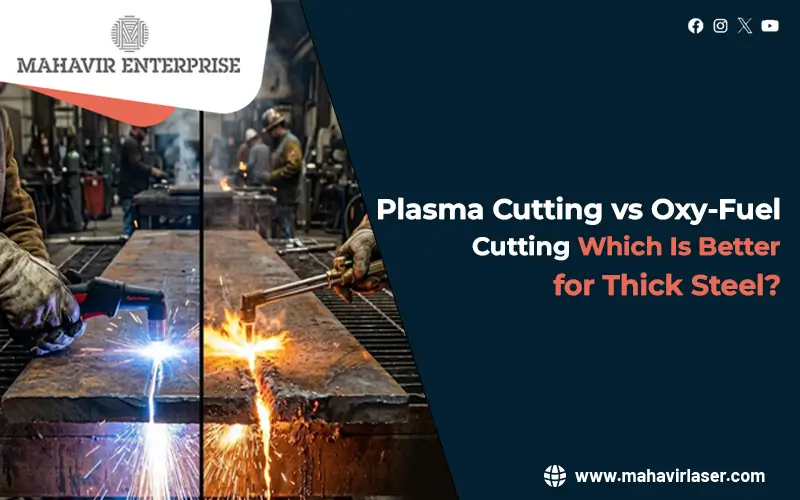
When it comes to metal fabrication, choosing the right cutting method can significantly impact precision, productivity and industrial efficiency. Plasma cutting and oxy fuel cutting are two of the most popular steel cutting techniques, offering unique applications. In this blog, we compare plasma cutting and oxy fuel cutting to help you make an informed decision.
Understanding Plasma Cutting
Plasma cutting is a thermal cutting process that uses high-velocity conductive gas to create a high-temperature plasma arc. This arc easily melts metal while the compressed gas blows away molten material, creating a precise cut. The CNC plasma cutting services in Vadodara work exceptionally well for conductive metals like mild steel, stainless steel, aluminium, copper and brass.
Understanding Oxy Fuel Cutting
Oxy fuel cutting or oxy-acetylene cutting uses the combination of oxygen and fuel gas to cut steel. The metal is first heated to its ignition temperature, then a stream of oxygen oxidizes and removes the metal. It can be used to cut a variety of metals, including carbon steel and mild steel.
Plasma Cutting vs Oxy-Fuel Cutting: Key Differences
#1 Cutting Speed
- Plasma Cutting is Much Faster
Plasma cutting offers excellent precision and accuracy compared to oxy fuel cutting, making it ideal for intricate cutting of medium to thick steel.
- Oxy Fuel Cutting Limitation
Oxy fuel cutting becomes slower as the metal must be preheated before cutting. This additional heating time increases processing duration.
Also Check: metal sheet design cutting
#2 Thickness Capabilities
- Oxy Fuel Cutting Excels in Thick Steel
Oxygen fuel cutting can efficiently cut steel thicker than 150mm, making it ideal for heavy structural fabrication, shipbuilding, steel plants, mining equipment and infrastructure.
- Plasma Cutting Limitation
Plasma cutting has limitations in cutting thicker materials, especially in heavy-duty applications.
#3 Cut Quality Comparison
- Plasma Cutting Produces Cleaner Cuts
Many businesses trust plasma cutting services Vadodara for its superior cutting precision. The narrow-heated and minimal slag formation offers better dimensional accuracy for projects requiring tight tolerances.
- Oxy Fuel Requires More Finishing
Oxy fuel often produces larger heat-affected zones and rougher edges. This requires additional grinding and finishing for heavy-duty industrial applications where precision is critical.
#4 Material Compatability
- Plasma Cutting Can Handle Multiple Metals
The CNC cutting plasma works in multiple conductive metals, including mild steel, stainless steel, aluminium, copper and brass. This versatility gives plasma cutting a significant advantage in mixed-material fabrication environments.
- Oxy Fuel is Limited Ferrous Metals
Oxy-fuel cutting primarily works on carbon steel because the process depends on oxidation. Stainless steel and aluminium do not oxidize in the same way, making them unsuitable for oxy fuel cutting.
Applications of Plasma Cutting and Oxy Fuel Cutting
Conclusion
Both plasma cutting and oxy fuel cutting remain essential cutting methods in the steel fabrication industry. The right choice depends on your production needs, material thickness, precision requirements and budgets. If you are looking for reliable laser cutting in Vadodara services, Mahavir Enterprise offers custom fabrication services tailored to industrial demands. To discuss your project, call us today.
Also Check: Top 5 Benefits of CNC Bending for Modern Manufacturing